
NBA Home Court Advantage in Betting: What 24 Seasons of Data Actually Show
 Available in US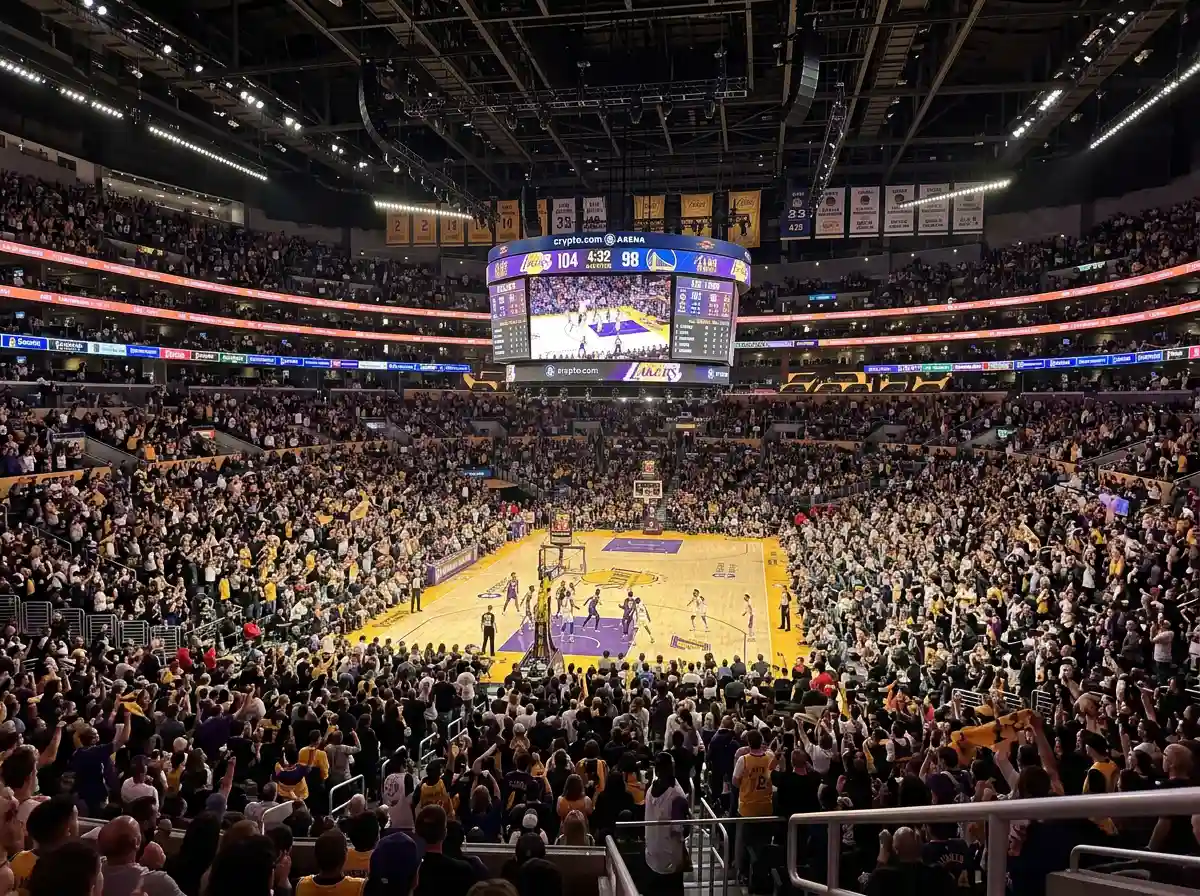
Every NBA Spread Builds In a Home Court Adjustment — Most Punters Never Check Whether It Is Accurate
I spent a full off-season in 2021 building a spreadsheet that tracked how bookmakers priced home court advantage versus how it actually played out team by team. The results were humbling — not because home court does not matter, but because the market already accounts for it better than most bettors assume. The edge is not in knowing that home teams win more often. Every bookmaker knows that. The edge is in knowing which specific home courts are overvalued, which are undervalued, and why. See also betting tips basketball nba for the complete NBA betting tips guide.
Across 24 regular seasons from 1999 to 2023, NBA home teams won 61.55% of their games. That is a peer-reviewed figure from a study published in Applied Sciences, and it holds remarkably steady decade after decade. Bookmakers translate that baseline into a spread adjustment of roughly 2–3 points for the home side. If two perfectly matched teams play on a neutral court, the spread would be a pick’em. Put one of them at home and the line moves to -2.5 or -3. The question for bettors is whether that generic adjustment captures the real advantage — and for many teams, it does not.
24 Seasons of Home Court Data: The 61.55% Baseline and Team-Level Extremes
The 61.55% win rate is a league average, and averages are liars. OKC Thunder posted the best against-the-spread record across the 2022–2025 window at 69–39 ATS, covering 64% of their games, with a substantial chunk of that driven by their home dominance. Orlando managed 65–42 ATS over the same stretch at 61%. On the other end, several teams with expensive rosters and loud arenas barely broke even at home against the number.
What separates the extremes is not crowd noise or arena aesthetics. It is roster construction and coaching philosophy. Teams built around young, fast players who thrive in transition — like those OKC squads — tend to amplify their style at home where they are comfortable with the court dimensions, the lighting, and the routine. Defensive-minded teams that rely on half-court execution see smaller home-away splits because their style is portable.
For bettors, the practical takeaway is that the generic 2–3 point home court adjustment is a blunt instrument. You should know which teams outperform it and which underperform it in the current season. That data is available for free on any NBA statistics site that tracks home and away splits, and cross-referencing it against the spread the bookmaker sets is a ten-minute exercise that most punters skip entirely.
Why Home Court Value Varies: Altitude, Arena Design, and Travel Distance
Denver is the case study everyone cites, and they are right to cite it. The Nuggets play at 1,609 metres above sea level, and visiting teams that fly in from sea-level cities face a measurable aerobic disadvantage, especially in the fourth quarter when fatigue accumulates. The effect is not subtle — Denver’s home record has consistently outperformed the league average over the past two decades, and the spread market prices it in with larger home adjustments than most teams receive.
But altitude is the exception, not the rule. For the remaining twenty-nine teams, the variables that drive home court splits are more mundane. Travel distance matters — a West Coast team playing its third road game in five nights on the East Coast faces jet lag, compressed sleep, and accumulated fatigue that have nothing to do with the arena they are walking into. The NBA has reduced back-to-back games by 23% over the past decade, but road trips still cluster games in ways that create rest asymmetries.
Arena design plays a smaller role than fans believe. The theory is that some arenas position the crowd closer to the court, increasing noise and disrupting communication. In practice, the difference between a “loud” arena and a “quiet” one is marginal once you control for team quality. What does matter is familiarity — players at home know the shooting background, the rim’s bounce characteristics, and the lighting angle. These micro-advantages compound across forty-eight minutes, especially in high-pressure moments where muscle memory takes over from conscious decision-making.
There is also a referee effect. Research has consistently shown that NBA home teams receive a slight officiating advantage in foul calls, likely driven by crowd influence on borderline decisions. The effect is not large enough to swing most games on its own, but it adds roughly half a point of value to the home side — a fraction that matters when you are betting spreads with a 2.5 or 3-point margin.
Is Home Court Advantage Declining? Post-Pandemic Trends
The pandemic bubble in 2020 was a natural experiment that no researcher could have designed. Games played on neutral courts with no fans showed a measurable decline in home court advantage — home teams won closer to 50% during the bubble, confirming that crowd presence contributes a real but modest portion of the effect.
Since fans returned, home court advantage has rebounded but has not fully recovered to its pre-pandemic baseline. The 2021–22 season showed the weakest home court numbers in a full-attendance year on record. Some analysts attributed this to expanded media access giving teams better scouting data on road opponents. Others pointed to the growing influence of three-point shooting, which introduces more variance into outcomes and narrows margins regardless of venue.
My read, after tracking this for several seasons, is that home court advantage is not disappearing — it is stratifying. Elite home teams are still dominant at home. Average teams are seeing their home edge erode toward negligible. And bad teams get no meaningful boost from their own arena. The 2–3 point generic adjustment persists in the market, which means the biggest opportunities for bettors lie at the extremes: fading teams whose home court is priced as if it matters when their data says it does not, and backing teams whose genuine home dominance is being underpriced because the market uses a flat estimate.
Applying Home Court Data Without Overfitting Your Model
The temptation with home court data is to over-engineer it — building complex models that weight altitude, travel distance, rest days, crowd capacity, and referee tendencies into a single number. I have tried this, and the result was a model that fit historical data beautifully and predicted future games no better than the bookmaker’s line. The variables interact in ways that are difficult to isolate, and the sample sizes for specific situations are too small to draw reliable conclusions within a single season.
What works is simpler. Know the league baseline. Know which teams in the current season are outperforming or underperforming it at home. Check whether the spread already reflects that team-level deviation or whether the bookmaker is still using a generic adjustment. If there is a gap, you have a candidate for a bet. If there is no gap, the market has already done the work and you should move on to a different angle. Home court advantage is one input in a larger framework, not a strategy in itself — and treating it as such is the difference between a useful tool and an expensive distraction. See also point spread explained and how home court shifts lines.
Which NBA teams have the strongest home court advantage for betting?
This varies by season, but teams with distinctive playing styles that amplify at home — particularly those in unique environments like Denver’s altitude — tend to show the most consistent home court edge. Check current-season home and away ATS splits rather than relying on historical reputation, as roster changes can shift the dynamic significantly.
Has home court advantage in the NBA decreased since 2020?
Home court advantage dipped during the 2020 bubble and has not fully returned to pre-pandemic levels. The effect is stratifying: elite home teams still dominate, but average and below-average teams see diminished home boosts. The generic 2-3 point spread adjustment remains in the market, creating potential value at the extremes.
How many points is home court advantage worth in an NBA spread?
The league-wide average is approximately 2-3 points, but team-level variation is significant. Some teams gain effectively zero home advantage while others see spreads shift by 4 or more points at home. The bookmaker’s generic adjustment may not reflect these differences, which is where informed bettors can find edges.
This material was created by the CourtEdge team.
Related posts

NBA Betting Advertising Regulation: How UK and US Rules Affect What Punters See

NBA Team Betting Trends: ATS Records, Cover Rates, and Where to Find Persistent Edges