
NBA Betting Data Sources and Tools: Where to Find Stats, Lines, and Model Inputs
 Available in US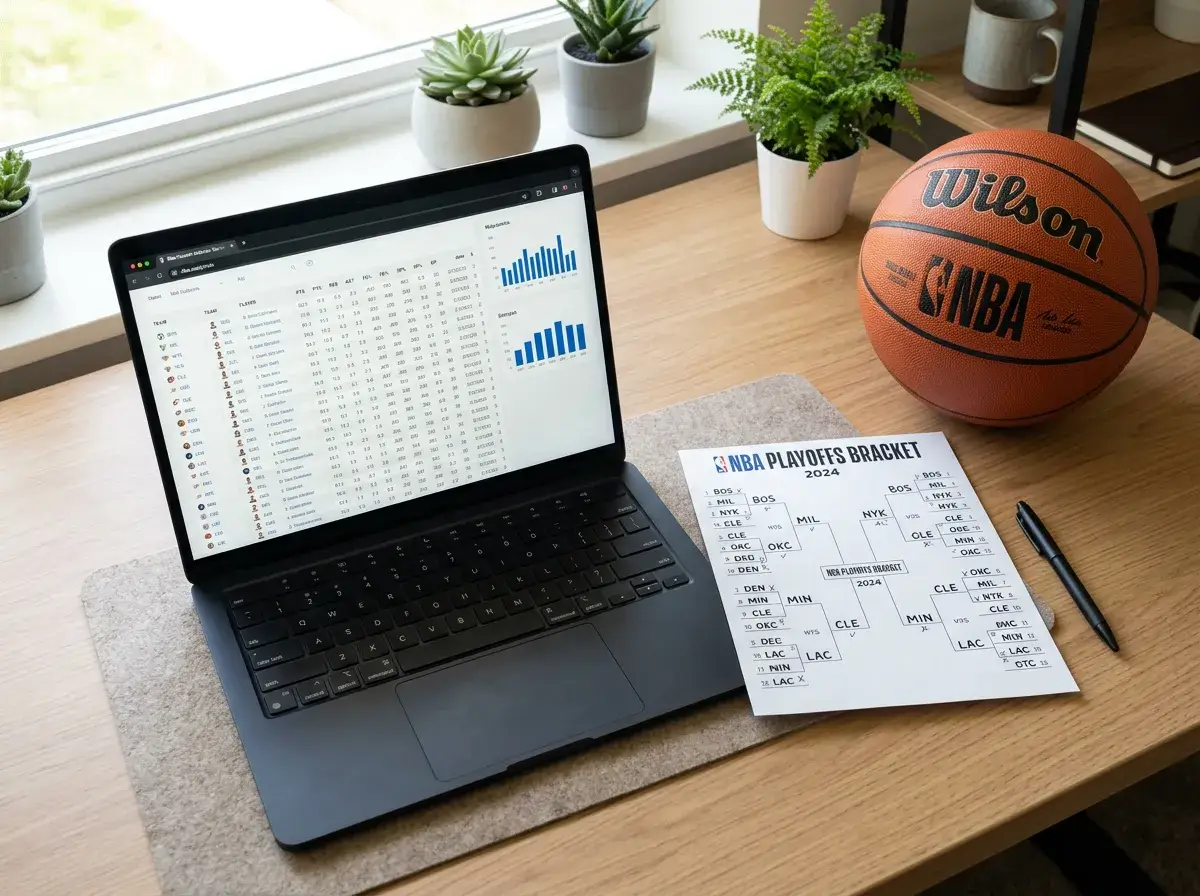
Sharp NBA Bettors Spend More Time Gathering Data Than Placing Bets — and the Best Sources Are Free
Early in my betting career, I assumed that the people who made money on the NBA had access to data I could not get — proprietary feeds, insider connections, paid databases that cost thousands per year. The reality was both more encouraging and more humbling. The data is largely free. The NBA partners with seventeen authorised gaming operators and publishes an extraordinary amount of statistical information through NBA.com/stats and its broadcast partners. What separates profitable bettors from unprofitable ones is not access to data but the discipline to gather it systematically, the analytical skill to interpret it correctly, and the patience to act on it only when the numbers say to act.
This guide covers the free and low-cost data sources that form the foundation of my pre-bet research process. I have tried dozens of platforms over nine years, and the ones listed here are the ones I use every day during the NBA season.
Free Statistical Sources: NBA.com, Basketball Reference, and Cleaning the Glass
NBA.com/stats is the league’s official statistical platform and offers the widest range of data of any free source. You can access team-level and player-level statistics, including offensive and defensive ratings, pace, usage rate, true shooting percentage, and on/off court splits. The data updates after every game and is filterable by date range, opponent, game location, and rest days. For building a simple power-rating model, NBA.com/stats provides every input you need at zero cost.
Basketball Reference is the historical complement to NBA.com. While NBA.com excels at current-season data, Basketball Reference offers decades of historical statistics, game logs, and advanced metrics. If you want to know how teams have performed in specific schedule spots historically — road back-to-backs, games after three days of rest, divisional matchups — Basketball Reference’s game finder tool lets you query those scenarios across multiple seasons. The site’s advanced stat glossary is also the best free resource for understanding what each metric measures and how it is calculated.
Cleaning the Glass is a paid service, but its free tier provides enough value to mention. The platform filters out garbage-time possessions — the final minutes of blowout games where both teams empty their benches — which distorts season-long averages in ways that matter for betting. A team’s offensive rating including garbage time might be 112; excluding it, the number drops to 109. That three-point difference can shift your projected spread by a full point, and Cleaning the Glass is the only widely available source that makes this adjustment automatically.
I use all three in sequence. NBA.com for current-season data and lineup-specific metrics. Basketball Reference for historical context and schedule-spot queries. Cleaning the Glass for garbage-time-filtered ratings that give a cleaner picture of how a team performs when the game is competitive.
Line and Odds Comparison Tools for UK Bettors
Line shopping — comparing odds across multiple bookmakers and selecting the best available price — is the simplest and most reliable way to improve your NBA betting results. FanDuel controls 39.6% of the US handle and DraftKings controls 35.3%, but the lines they post are not identical. Differences of half a point on spreads and 0.05 to 0.10 on decimal odds are common, and over a season of three hundred bets, consistently taking the best available price adds one to two percentage points to your ROI.
Odds comparison sites aggregate prices from multiple operators and display them side by side. For UK bettors, the key is finding a comparison tool that includes your specific UKGC-licensed operators, because the odds posted by UK bookmakers sometimes differ from US-focused sportsbooks due to different handle distributions and regional pricing models. The best comparison tools update in near real time and allow you to filter by market type — spread, moneyline, total, player props — so you can quickly identify the operator offering the best price on the specific bet you want to place.
I check odds comparison at two points during my pre-bet process: once when I first identify a game I want to bet, and again immediately before placing the bet. Lines move throughout the day, and the operator offering the best price at noon may not be offering the best price at tip-off. The second check takes thirty seconds and regularly saves me one or two ticks of value per bet.
Injury Report Aggregators and the 15-Minute Update Rule
The NBA’s 2026 injury reporting rules require teams to update injury reports every fifteen minutes — a significant acceleration from the previous hourly cadence. Game-day reports are submitted between 11:00 and 13:00 local time, which translates to late afternoon and evening in the UK. This compressed reporting timeline means that injury information moves faster, lines adjust faster, and bettors who are not monitoring updates in near real time are operating on stale information.
Dedicated NBA injury aggregator accounts on social media — journalists and bot-operated feeds that republish official injury report updates as they drop — are the fastest way to receive this information. I follow three such accounts with push notifications enabled and cross-reference any injury update against my pre-game analysis before deciding whether to bet, adjust my position, or pass. The fifteen-minute update cycle means that a player’s status can change from probable to questionable to out within a single hour, and each change shifts the line.
For bettors who want structured injury data rather than social media feeds, several analytics platforms aggregate injury reports alongside statistical projections, showing you both the injury update and its estimated impact on the spread and total. These tools are particularly valuable for prop bettors, because a single injury can cascade through multiple player props — the injured player’s props become void, his replacement’s minutes and usage spike, and the opposing team’s defensive matchup changes. Understanding that cascade in real time is the difference between reacting to opportunity and missing it.
What are the best free NBA statistics websites for betting?
NBA.com/stats provides current-season data including offensive/defensive ratings, pace, usage rates, and lineup splits. Basketball Reference offers decades of historical data and a game finder tool for querying specific schedule spots. Cleaning the Glass filters out garbage-time possessions for cleaner statistical analysis. Together, these three sources provide all the core inputs for a betting model at no cost.
Where can UK bettors compare NBA odds across bookmakers?
Odds comparison websites aggregate prices from multiple UKGC-licensed operators and display them side by side, filterable by market type. Check that the comparison tool includes your specific UK operators, as odds may differ from US-focused sportsbooks. Compare prices twice — once during research and again immediately before placing the bet — because lines move throughout the day.
How do I access real-time NBA injury reports for betting?
Follow dedicated NBA injury aggregator accounts on social media with push notifications enabled. The NBA’s 2026 rules require teams to update injury reports every 15 minutes, with game-day reports submitted between 11:00 and 13:00 local US time (late afternoon/evening in the UK). Cross-reference every update against your pre-game analysis before acting.
This material was created by the CourtEdge team.
Related posts

NBA Betting Advertising Regulation: How UK and US Rules Affect What Punters See
NBA Team Betting Trends: ATS Records, Cover Rates, and Where to Find Persistent Edges