
Responsible Gambling for NBA Bettors: UK Tools, Limits, and Warning Signs
 Available in US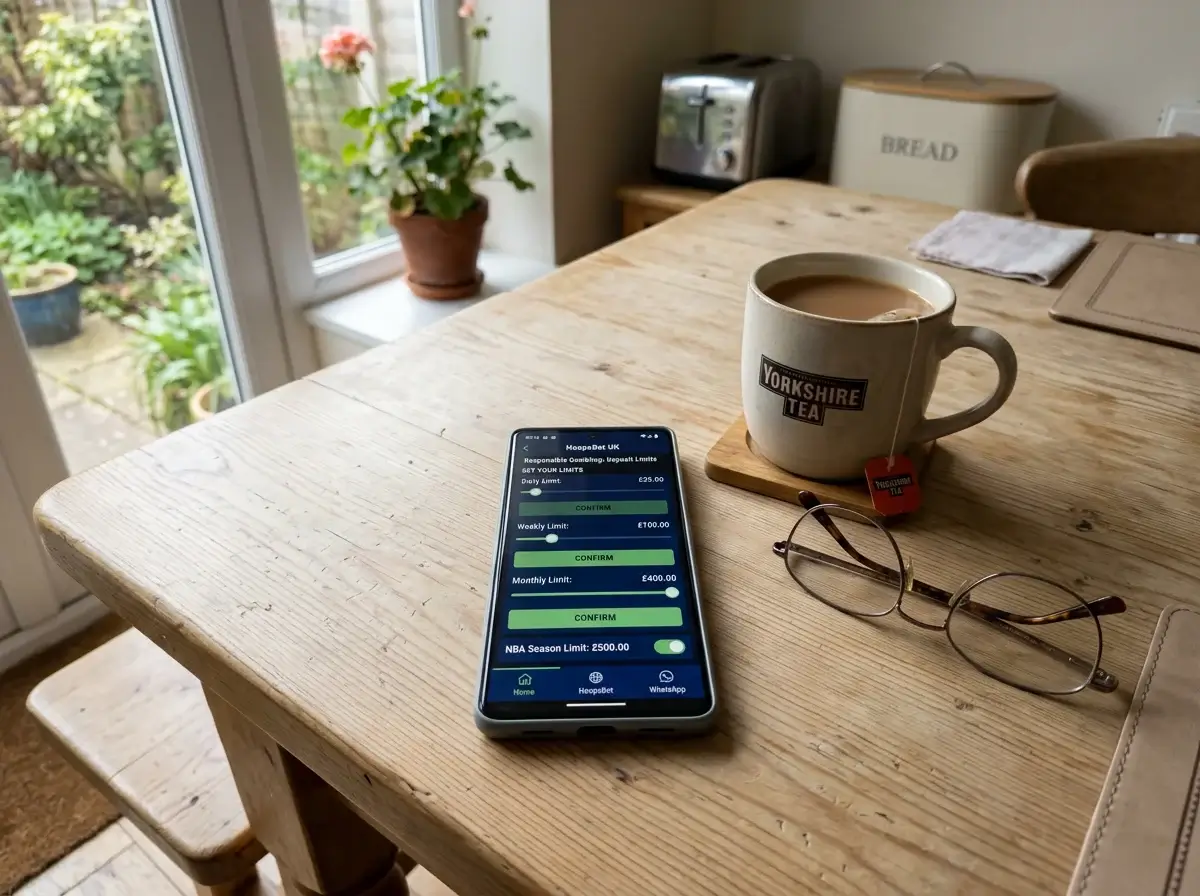
Forty-Seven Percent of UK Adults Gamble — Recognising When It Stops Being Entertainment Is the Real Edge
I lost count of the responsible gambling articles I have read over the years — most of them read like legal disclaimers dressed up as content. Bland, detached, written by someone who has never sat in a living room at two in the morning refreshing a live NBA line while knowing they should be asleep. This is not that article. I have been betting on basketball for the better part of a decade, and I have watched friends, online acquaintances, and people I respect cross the line between controlled wagering and compulsive behaviour. Some came back. Some did not. See also betting tips basketball nba for the complete NBA betting tips guide.
Roughly 47% of UK adults participate in some form of gambling, from lottery tickets to fixed-odds terminals to sports betting. Within that group, about 10% actively bet on sport online — a figure that has grown steadily since the explosion of mobile betting apps in the late 2010s. The NBA is a particularly sticky product for bettors because it runs six months of regular season, two months of playoffs, and offers hundreds of markets per game. That volume is exactly what makes it both an opportunity and a risk. If you cannot draw a hard line between your betting activity and the rest of your life, the sheer availability of NBA action will make that line harder to maintain, not easier.
Nothing in this article replaces professional advice. What it does is lay out the warning signs I have learned to watch for — in myself and in others — and the UK-specific tools that exist to put guardrails in place before the problem outgrows your ability to manage it.
Warning Signs: When NBA Betting Crosses From Hobby to Problem
The shift from recreational to problematic gambling is rarely dramatic. Nobody wakes up one day and decides to ruin their finances. It happens in small increments — a gradual escalation that is easier to see from the outside than from within. I know this because I spent an entire December in 2019 convincing myself that doubling my unit size was a strategic decision, not an emotional one. It took a friend asking why I seemed anxious during every game to recognise what was happening.
The clearest warning sign is chasing losses. If you find yourself placing a late-night bet on a game you have not researched because you need to “get back to even” from earlier losses, that is chasing. It feels like strategy in the moment. It is not. The second sign is secrecy — hiding the size of your bets or the frequency of your betting from people you live with. If you would be uncomfortable showing your betting app to your partner or housemate, that discomfort is information you should not ignore.
Betting with money earmarked for bills, rent, or savings is a bright-line indicator. So is increasing your stake size not because your bankroll has grown through wins but because your standard bet no longer produces the emotional response it used to. That escalation pattern — needing higher stakes to feel the same engagement — mirrors tolerance building in other compulsive behaviours, and it is one of the most reliable predictors that recreational betting has become something else.
There is a gender dimension worth noting: 15% of men in the UK bet on sport compared to 4% of women, but the gap narrows in younger demographics and the rate of problem gambling among female bettors is rising faster than the headline numbers suggest. The assumption that problem gambling is exclusively a male issue causes it to go unrecognised in women who do develop unhealthy patterns.
One question I ask myself every month: if I stopped betting tomorrow, would anything in my life improve? If the answer is anything other than “no,” that is a signal to re-evaluate, not a signal to bet smarter.
UK Regulatory Tools: Deposit Limits, Reality Checks, and Self-Exclusion
The UKGC does not get enough credit from bettors for the infrastructure it has built around player protection. In 2024-25 alone, the regulator conducted 9,700 compliance actions against licensed operators — more than double the 4,200 actions taken the previous year. That escalation tells you something about the direction of regulation: it is tightening, not loosening, and the tools available to individual bettors are more robust than most people realise.
Every UKGC-licensed operator is required to offer deposit limits — daily, weekly, and monthly caps that you set yourself and that the operator enforces. Once a deposit limit is lowered, it takes effect immediately. If you want to raise it, there is a mandatory cooling-off period of at least twenty-four hours, and some operators extend that to seventy-two. This asymmetry is intentional: it protects you from impulsive decisions to increase your exposure when you are in an emotional state. I set my monthly deposit limit at the start of every NBA season and do not change it. The number is based on what I can afford to lose entirely without affecting any other financial obligation.
Reality checks are timed notifications that interrupt your session to show you how long you have been logged in and how much you have wagered. Most UK operators let you set these at intervals of thirty minutes, one hour, or two hours. They feel intrusive — and that is the point. NBA games stretch across the evening and into the early hours in UK time, and it is easy to lose track of both time and spend when you are watching a game and placing live bets simultaneously.
Adam Silver, the NBA commissioner, has publicly argued for federal regulation rather than the current state-by-state patchwork in the US, and has called for tighter controls on advertising and promotion. The UK is ahead of the US on several of these fronts. From April 2025, new stake limits cap online slot bets at five pounds per spin for those aged twenty-five and over, and two pounds for eighteen to twenty-four-year-olds. These limits apply to slots rather than sports betting, but they signal the regulatory direction: the UKGC is willing to impose hard constraints on UK betting operators when it determines that voluntary measures are insufficient.
Self-exclusion is the most powerful tool in the kit. You can self-exclude directly with an individual operator, which blocks your account for a minimum of six months, or you can use GamStop, which applies a single exclusion across all UKGC-licensed operators simultaneously. During a self-exclusion period, the operator is legally prohibited from sending you marketing materials, and if you attempt to open a new account, the operator is required to refuse it.
Where to Get Help: GamStop, GamCare, and the National Gambling Helpline
Last season, a reader emailed me to say he had used GamStop after reading an earlier piece I wrote about bankroll discipline. He told me it was the first night in months he had watched an NBA game without checking his phone every thirty seconds. That stuck with me — not because GamStop is a magic solution, but because the act of registering forced him to confront a behaviour he had been rationalising for the entire season.
GamStop is the UK’s free self-exclusion scheme. Registration takes a few minutes, and you choose a minimum exclusion period of six months, one year, or five years. Once active, all UKGC-licensed online operators are notified, and your accounts are closed. The process is not instant — it can take twenty-four hours for all operators to implement the block — but once it is in place, reversing it before your chosen period expires is not possible. That irreversibility is the feature, not a flaw.
GamCare operates the National Gambling Helpline, which is available by phone and live chat. They also offer structured counselling — typically six to eight sessions with a trained therapist who specialises in gambling-related harm. There is no cost to the individual; it is funded by the gambling industry through the statutory levy. If you are not ready for a phone call, GamCare’s website includes self-assessment tools that walk you through a structured set of questions about your gambling behaviour. The questions are straightforward and the results are private.
For bettors who are not at the point of needing self-exclusion but want to tighten their controls, the simplest step is to set deposit limits, enable reality checks, and remove saved payment methods from your betting apps. Making it harder to deposit impulsively — even by thirty seconds — breaks the circuit between emotion and action. That circuit is where most damage happens, and anything that interrupts it works in your favour. See also NBA bankroll management for disciplined betting.
How do I set deposit limits at UK bookmakers for NBA betting?
Log in to your betting account and navigate to the responsible gambling or account settings section. Every UKGC-licensed operator is required to offer daily, weekly, and monthly deposit limits. Lowering a limit takes effect immediately; raising it requires a cooling-off period of at least 24 hours. Set your limit before the NBA season starts based on what you can afford to lose entirely.
What is GamStop and how does it work for sports bettors?
GamStop is a free UK self-exclusion scheme that blocks you from all UKGC-licensed online gambling operators at once. You choose a minimum exclusion period of 6 months, 1 year, or 5 years. Once active, operators close your accounts and stop sending marketing materials. Registration takes a few minutes and cannot be reversed before your chosen period expires.
What are the UKGC’s new stake limits introduced in 2025?
From April 2025, online slot stake limits are capped at 5 pounds per spin for bettors aged 25 and over, and 2 pounds for those aged 18-24. These limits currently apply to slots rather than sports betting, but they indicate the direction of UK gambling regulation toward tighter consumer protections.
This material was created by the CourtEdge team.
Related posts

NBA Betting Advertising Regulation: How UK and US Rules Affect What Punters See
NBA Team Betting Trends: ATS Records, Cover Rates, and Where to Find Persistent Edges