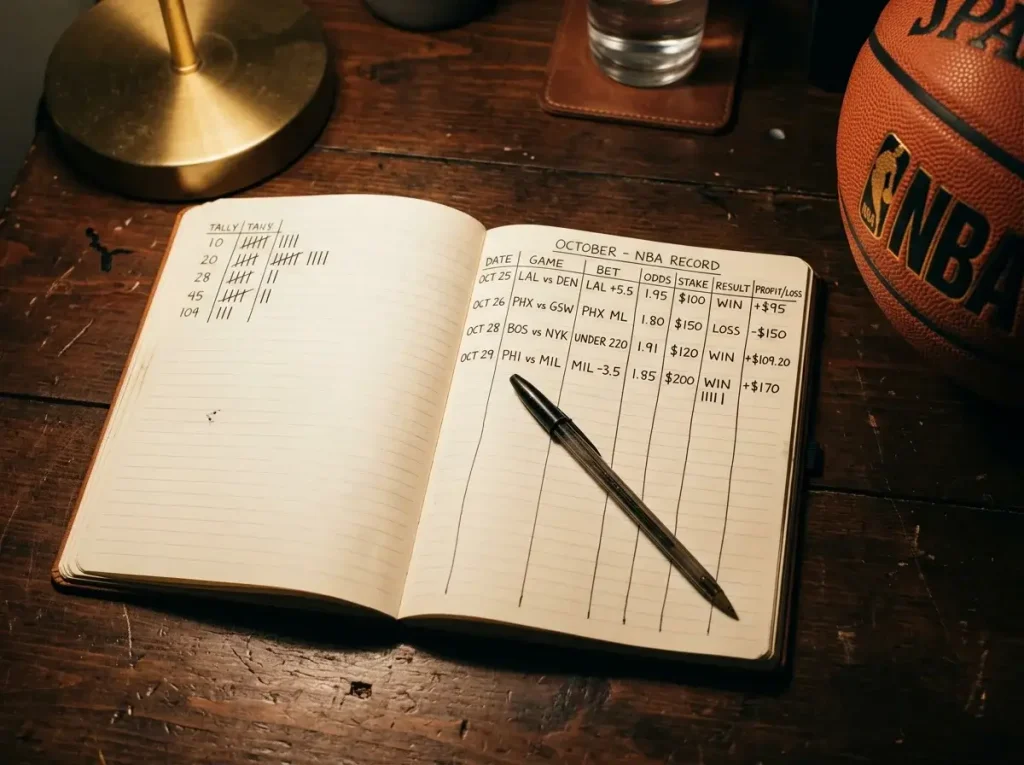
How NBA Injuries Move Betting Lines — and How to React Before the Market Does
 Available in US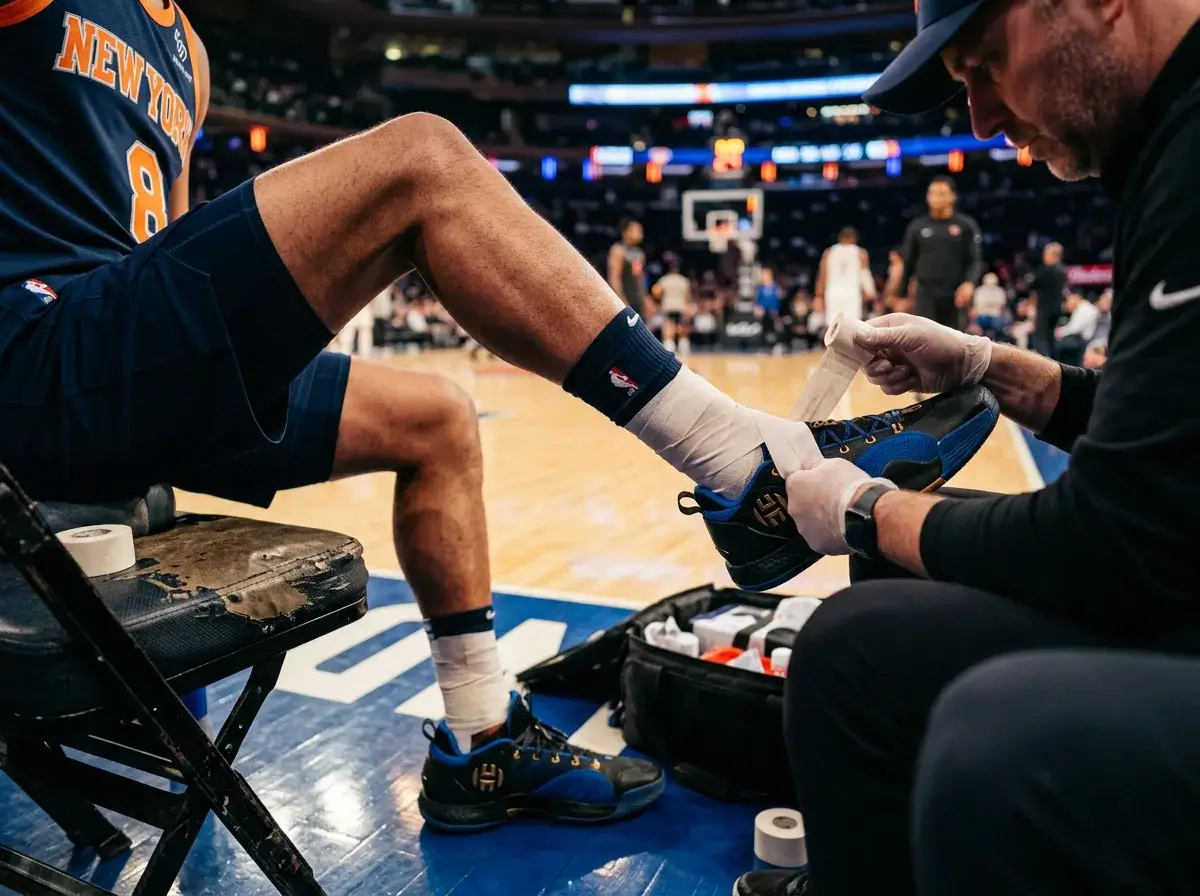
A Single Injury Report Can Shift an NBA Spread by Five Points in Minutes — the 2026 Reporting Rules Made It Faster
Last February I had a position on a Mavericks game — took them at -3.5 early in the morning, liked the matchup, felt comfortable. At 17:47 UK time, roughly ten minutes after the updated injury report dropped, Luka Doncic was upgraded from “questionable” to “out.” By the time I refreshed the screen, the line had swung to -1. Three and a half points of value, evaporated in the span of a notification I missed because I was making dinner. That game taught me more about injury-report discipline than any article or podcast ever had. See also betting tips basketball nba for the complete NBA betting tips guide.
The NBA’s revised reporting rules have compressed the information cycle dramatically. Teams now update injury statuses every fifteen minutes on game day, with the formal injury report filed between 11:00 and 13:00 local time — which translates to roughly 16:00 to 18:00 for UK bettors. That window is when the largest and fastest line movements occur, because a single status change on a star player can reprice the entire game.
The 2026 NBA Injury Reporting Timeline: 15-Minute Updates and Game-Day Windows
Understanding the timeline is not optional — it is the infrastructure of modern NBA betting. The process works in layers. The preliminary injury report is released the day before the game, usually by early evening local time. This report lists players as “probable,” “questionable,” “doubtful,” or “out.” The pre-game market prices in the probabilities associated with each designation: a “questionable” player has roughly a 50/50 chance of playing, so the spread typically reflects a midpoint between their playing and not playing.
On game day, the formal report narrows the uncertainty. The 11:00–13:00 local-time window is when “questionable” players are most frequently upgraded or downgraded, and that is when the lines move fastest. After the formal report, teams continue to update every fifteen minutes until tip-off. Late scratches — players downgraded to “out” within the final hour — create the sharpest line movements because the market has less time to absorb and reprice.
For UK punters, the practical implication is that the most actionable window for injury-driven bets falls between 16:00 and 20:00 UK time for East Coast games and 19:00 to 23:00 for West Coast games. If you are placing NBA bets in the morning before work, you are betting blind on the injury front. The line you see at 08:00 will not be the line at tip-off if any player’s status changes during the day.
Quantifying Star Absence: How Much Does Losing a Top-Five Player Move the Line?
Not all absences are equal, and the market knows it. When a team loses a role player — a bench wing who averages twelve minutes per game — the spread barely twitches. When a franchise player goes down, the repricing is immediate and substantial. Home court advantage is typically worth 2–3 points on the spread; a top-five NBA player’s absence can shift the line by 3–5 points or more depending on the team’s depth.
I keep a running list of impact values for the top thirty or so NBA players — a rough estimate of how many points each player is worth to his team’s spread based on historical on/off data. This is not proprietary information; on/off splits are available on most public statistics sites. A player whose team outscores opponents by eight points per 100 possessions when he plays and is outscored by two points when he sits represents a ten-point-per-100-possessions swing. Translated to a game-level spread, that player’s absence should move the line by four to five points, and if the bookmaker only adjusts by two or three, there is a discrepancy worth investigating.
The complexity arises with multi-player absences. If a team is missing both its starting point guard and its starting centre, the impact is not simply additive — the interaction between the two absences may be worse than the sum of the individual effects because the replacement lineup lacks the synergy of the starters. Conversely, some teams have built their rosters precisely to absorb absences, with interchangeable wings and multiple playmakers. Knowing a team’s roster construction is as important as knowing who is out.
When the Market Overreacts: Finding Value After Injury Announcements
The market’s initial reaction to a star injury tends to overshoot. I have tracked this pattern for six seasons and the tendency is consistent: the first line movement after a high-profile player is ruled out is larger than the final line at tip-off. This happens because recreational bettors pile onto the opponent immediately, creating a handle imbalance that the bookmaker adjusts for — and then sharp money comes in on the other side, recognising that the adjusted line has overcorrected.
The overreaction is most pronounced with high-profile names. When a household name like LeBron James or Stephen Curry is ruled out, the public perception of the team’s chances drops more steeply than the data supports. These teams have invested heavily in roster depth precisely because their stars cannot play all eighty-two games. The spread adjustment is warranted, but the magnitude is frequently exaggerated in the first thirty to sixty minutes after the announcement.
My approach is to wait. When a star is ruled out, I note the immediate line movement but do not act on it. I wait for the line to stabilise — usually forty-five to ninety minutes after the report — and then compare the settled line to my own estimate of the injury’s impact. If the settled line still overweights the absence, I take the injured team. If it has corrected to a fair price, I pass. Patience is the entire edge here, and it requires the discipline to watch the initial panic without acting on it.
There is also value on the other side — games where a lesser-known but tactically important player is ruled out and the market barely moves. A backup centre who anchors the team’s defensive scheme may be worth only half a point on the spread, but if his absence compromises the team’s ability to switch on defence, the player prop and points markets for the opposing offence may offer value that the main spread does not reflect. These are quieter edges, harder to find, but they tend to persist because the market focuses its attention on star names.
Injury Data as Infrastructure, Not Opportunity
I do not think of injury reports as isolated events to trade. I think of them as infrastructure — a layer of information that either confirms or undermines every other edge I have identified. If my analysis says a team should cover the spread and the injury report is clean, I bet with higher confidence. If a key player’s status is uncertain, I reduce my stake or wait for clarity. And if the report contradicts my position — a key defensive player on the opponent’s side is suddenly back from injury — I abandon the bet entirely.
The bettors who struggle with injury data are the ones who treat it as a standalone strategy: “Star X is out, therefore bet the other team.” That approach ignores everything else — depth, matchup context, the specific market you are betting, and whether the line already reflects the absence. Injury reports are one input in a process, and the process is what produces results over a full season. See also back-to-back schedules compounding injury risk.
When are NBA injury reports released for betting purposes?
The formal game-day injury report is filed between 11:00 and 13:00 local time in the US, which is roughly 16:00-18:00 UK time for East Coast games. After that, teams update statuses every 15 minutes until tip-off. Preliminary reports listing probable, questionable, doubtful, and out designations are released the day before the game.
How much does a star player’s absence move an NBA spread?
A top-five franchise player’s absence typically shifts the spread by 3-5 points, though the exact amount depends on the team’s depth and the specific player’s on/off impact. Role player absences move lines by less than a point. The initial market reaction often overshoots, with the line settling closer to fair value within an hour of the announcement.
Should I bet immediately after an NBA injury announcement?
Generally, no. The immediate line movement after a high-profile injury tends to overreact as recreational money floods in. Wait 45-90 minutes for the line to settle, then compare the adjusted number to your own assessment of the injury’s impact. If the settled line still misprices the absence, that is when the value appears.
This material was created by the CourtEdge team.
Related posts

NBA Betting Advertising Regulation: How UK and US Rules Affect What Punters See
NBA Team Betting Trends: ATS Records, Cover Rates, and Where to Find Persistent Edges