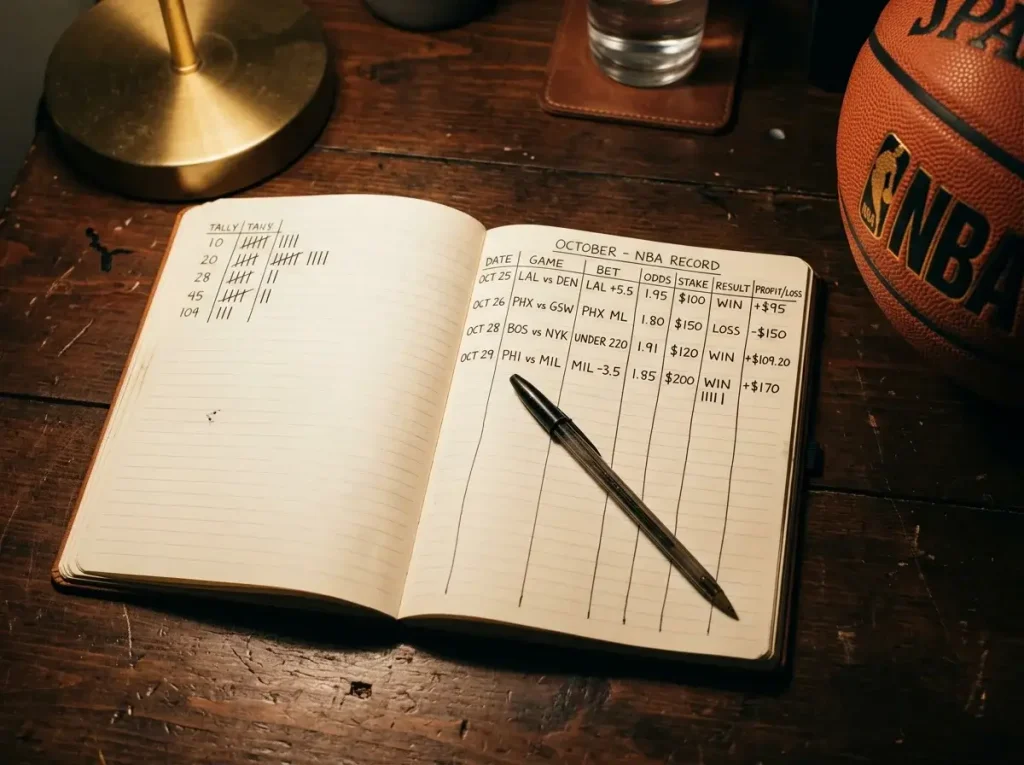
NBA Live Betting Strategy: How to Profit From In-Play Markets
 Available in US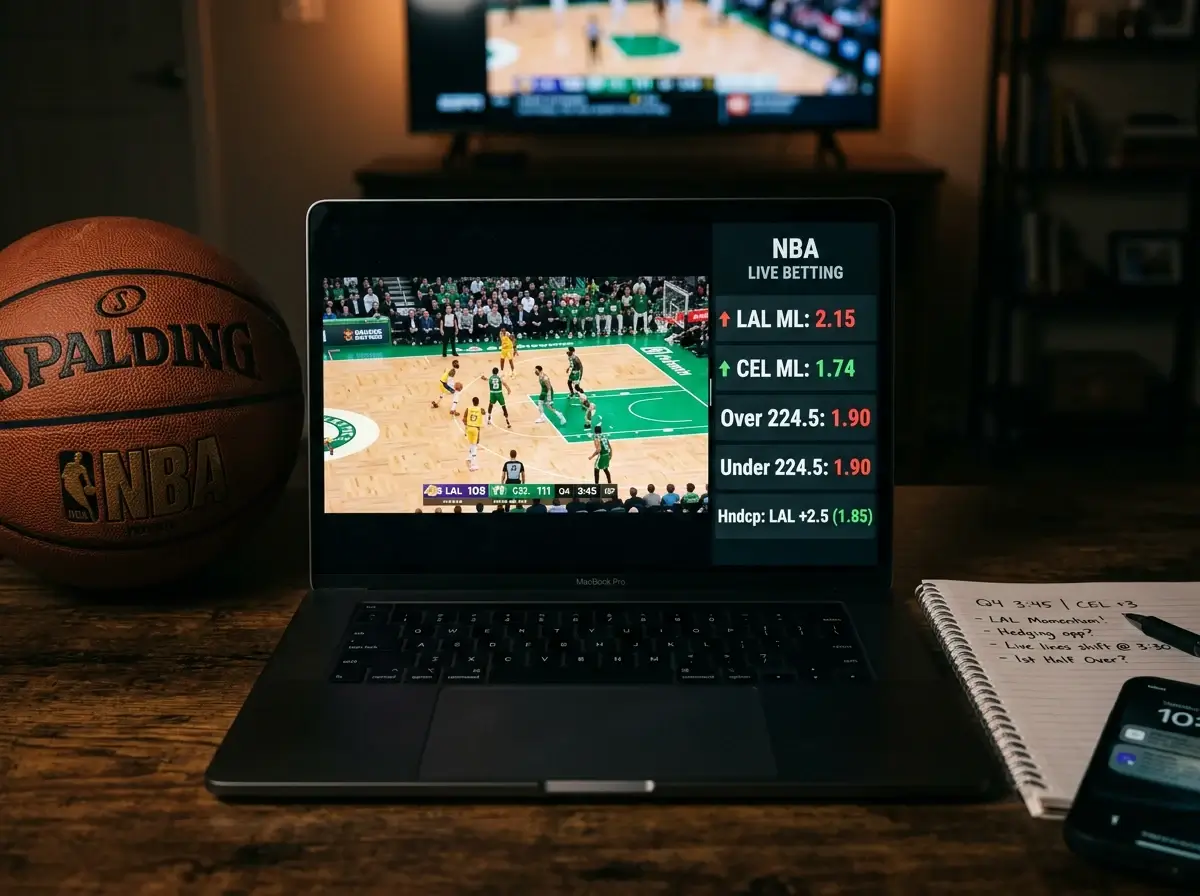
More Than 60% of Global Betting Revenue Now Comes From In-Play Markets — NBA Is Leading That Shift
Three years ago I placed a halftime bet on a Denver Nuggets game that changed how I think about NBA wagering entirely. Denver trailed by fourteen at the break, the live spread had ballooned to +8.5 at juicy odds, and I knew from their season-long data that they were the best third-quarter team in the league. They won by six. That single bet did not make me rich, but it proved something I had suspected for a while: the best NBA value does not always exist before tip-off. See also betting tips basketball nba for the complete NBA betting tips guide.
Live betting — also called in-play — now accounts for 62.35% of online sports betting revenue globally and is growing at a compound annual rate above 13%. The NBA is a perfect vehicle for it. Games last roughly two and a half hours, momentum shifts are frequent and visible, and the four-quarter structure creates natural re-entry points where odds reset. For UK punters watching games that tip off at midnight or later, live betting also solves a practical problem: you can watch the first quarter, assess the flow, and bet with information the pre-game market could not have priced in.
Timing Your Entry: First Quarter, Halftime, and Fourth-Quarter Windows
Not all moments in a live NBA game carry the same value. The odds engine reacts to every basket, every turnover, every timeout — but it reacts with varying degrees of accuracy depending on where the game clock sits. I break every game into three decision windows, and each one demands a different mindset.
The first quarter is chaos. Rotations are fresh, coaches are still feeling out matchups, and small runs of six or eight points create spread swings that look dramatic but mean very little in context. A team that falls behind 28–18 after twelve minutes is not in crisis — it is barely a quarter through a forty-eight-minute contest. The live market, however, often reprices as if the opening burst will continue at the same rate. That overreaction is where I find my most frequent entries. If I had a pre-game lean toward a team and they fall behind early without any structural reason — no injury, no rotation change, no obvious tactical mismatch — the live line at the end of the first quarter regularly offers better value than anything available before tip-off.
Halftime is the sharpest window. Coaches have made adjustments, the starting lineup is about to re-enter, and you have twenty-four minutes of data to inform your read. The halftime spread is essentially a new bet on a fresh game, and it tends to be priced more efficiently than first-quarter lines. I use halftime primarily when I see a clear second-half pace advantage — a team that plays faster in the third quarter against a team that historically fades after the break.
The fourth quarter is the tightest and most dangerous. About 19% of NBA games are decided in the final period, where pace drops to 90–100 possessions and teams tighten rotations to their best seven or eight players. The margin for error narrows, free throws dominate, and the live odds engine becomes increasingly accurate because less game remains to generate variance. I rarely enter new positions in the fourth quarter unless I spot a specific situational edge — a team in the bonus early, or a clear fatigue mismatch where one side played last night and the other had two days off.
Momentum Reads vs Data Reads: What Actually Predicts NBA Live Swings
Every basketball broadcast will tell you about “momentum.” A team hits three consecutive threes, the crowd erupts, and the commentator declares that the momentum has shifted. I spent an entire season tracking whether these perceived momentum shifts actually predicted outcomes over the next five minutes of game time. The answer was uncomfortable: they did not, at least not reliably enough to bet on.
What does predict live swings is structural. Foul trouble on a key defender forces a weaker rotation player into the game, and the opposing offence exploits the mismatch. A coach switches from zone to man-to-man defence, and the other team’s spacing improves immediately. A star player picks up his fourth foul early in the third quarter and sits for six minutes. These are data reads, not vibes, and they move the needle in ways that short-term scoring runs do not.
I keep a simple mental checklist during live games: who is on the court right now, how many fouls do they have, and has the coach made a tactical change? If the answers to those questions explain the current scoring run, I fade the overreaction. If the answers suggest a genuine structural shift — a rotation collapse, an injury mid-game — I adjust my position accordingly. The discipline is in separating noise from signal, and noise is what the live market overweights most.
Live Betting Traps: Chasing, Overreaction, and Latency Gaps
Charlie Baker, the NCAA president, put it bluntly when he said the smartphone changed everything about sports betting — the speed, the access, the impulse. Live NBA betting sits at the extreme end of that spectrum. You are watching a game, the odds shift in real time, and the temptation to act on every swing is enormous. That temptation is the trap.
Chasing live bets is the fastest way to drain a bankroll I have seen in this industry. You back a team pre-game, they fall behind, and instead of accepting the loss you double down on the live line at worse odds. Then they fall further behind and you go again. Three bets deep on the same game, all underwater, all placed on emotion rather than analysis. I set a hard rule years ago: one live entry per game, maximum. If the position goes wrong, I accept it and move on.
Latency is the other silent killer. The odds you see on your screen are not the odds available right now — they are the odds available a few seconds ago. In a fast-moving NBA game, a lot can change in two or three seconds. A three-pointer hits, the line shifts, and by the time your bet processes you are getting a price that already reflects the event you were trying to react to. UK bettors face an additional layer of latency because they are watching streams that lag behind the live broadcast by anywhere from five to thirty seconds. If you are betting live on a game you are watching via a delayed stream, the market has already moved past your information.
The best defence against both traps is pre-commitment. Before the game starts, I identify one or two scenarios that would trigger a live entry — “if Team A trails by 10+ at halftime and their best player has fewer than two fouls, I will take the live spread.” That pre-commitment filters out impulsive bets and forces me to wait for conditions I have already analysed. It does not guarantee profit, but it guarantees process — and process, applied consistently across an NBA totals or spread strategy, is the only thing that compounds over a full season.
Why Live Betting Rewards the Prepared and Punishes the Reactive
Live NBA betting is not a shortcut. It is a different arena with higher speed, tighter windows, and more psychological pressure than pre-game wagering. The 62% revenue share it commands tells you the industry loves it — and the industry loves products with high turnover and high margin. That should make you cautious, not excited. The bettors who extract value from live markets are the ones who watch games with a plan, enter at pre-identified windows, and resist the pull of every scoring run and timeout. Everyone else is paying the entertainment tax. See also NBA injury impact on lines for live adjustments.
How does live/in-play NBA betting work at UK bookmakers?
Live NBA betting lets you place wagers while a game is in progress. UK bookmakers update odds in real time based on the score, game clock, and situational factors. You can bet on spreads, totals, moneylines, and player props that adjust continuously. Most UK platforms offer live betting through their apps with cash-out options available on selected markets.
Which NBA quarters offer the best live betting value?
The end of the first quarter and halftime tend to offer the most exploitable live value. First-quarter overreactions to early scoring runs create mispriced spreads, while halftime lines benefit from a full half of data and upcoming coaching adjustments. Fourth-quarter live markets are the most efficiently priced and hardest to beat.
Can I cash out a live NBA bet before the game ends?
Most major UK bookmakers offer cash-out on live NBA bets, though availability depends on the market and the game situation. Cash-out values fluctuate with the live odds, so the amount offered will change as the game progresses. Partial cash-out, where you secure some profit while leaving part of the bet active, is also available at several UK operators.
This material was created by the CourtEdge team.
Related posts

NBA Betting Advertising Regulation: How UK and US Rules Affect What Punters See
NBA Team Betting Trends: ATS Records, Cover Rates, and Where to Find Persistent Edges